

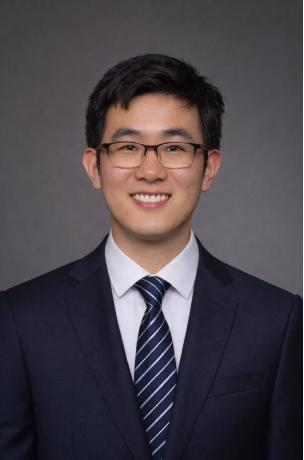

南方科技大学医学院医学神经科学系助理教授、博士生导师。2018年博士毕业于清华大学,2019-2024年于美国得克萨斯大学MD安德森癌症中心和西南医学中心从事博士后研究,并于2024年晋升为Research Scientist。2026年4月加入南方科技大学医学院。 长期聚焦少突胶质细胞在大脑发育和神经疾病中作用,成果以第一作者身份(含共一)发表于Neuron、Nature communications 和Cell Reports等国际权威期刊。
利用小鼠遗传学、原代细胞培养及多组学分析等综合手段,系统研究少突胶质细胞在中枢神经系统发育及病理条件下的多重功能,主要包括:(1)少突胶质细胞及其形成的髓鞘对神经回路的塑造机制 ;(2)髓鞘发育与稳态维持的关键信号通路及调控元件。(3)脱髓鞘疾病的病理生理机制和髓鞘再生的策略。
2012-09至2018-06, 清华大学,博士
2008-09至2012-06, 兰州大学,学士
2026-04至今,南方科技大学医学院,助理教授
2024-02至2026-04,得克萨斯大学西南医学中心,Research Scientist
2020-09至2024-01,得克萨斯大学西南医学中心,博士后
2019-02至2020-09,得克萨斯大学MD安德森癌症中心,博士后
2018-02至2019-01,清华大学,研究助理
美洲华人神经科学家学会年会Trainee Award (2026年)
Brain & Behavior Research Foundation青年学者基金 (2024 年)
第六届国际离子通道大会Poster Competition Outstanding Award (2017年)
担任Frontiers in Molecular Neuroscience、Cells、STAR Protocols 、Brain Sciences等杂志的审稿人。
1. Zhang T., Bhambri A., Zhang Y., Barbosa D., Bae H.G., Xue J., Wazir S., Mulinyawe S.B., Kim J.H., and Sun L.O. (2023). Autophagy collaborates with apoptosis pathways to control oligodendrocyte number. Cell Reports 42, 112943. 10.1016/j.celrep.2023.112943.
2. Zhang T.*, Bi C.*, Li Y.*, Zhao L., Cui Y., Ouyang K., and Xiao B. (2024) Phosphorylation of Piezo1 at a single residue Serine-1612 regulates its mechanosensitivity and in vivo mechanotransduction function. Neuron 112 (21), 3618-3633. 10.1016/j.neuron.2024.08.009. (*co-first author)
3. Geng, J.*, Liu, W.*, Zhou, H.*, Zhang, T.*, Wang, L.*, Zhang, M., Li, Y., Shen, B., Li, X., and Xiao, B. (2020). A Plug-and-Latch Mechanism for Gating the Mechanosensitive Piezo Channel. Neuron 106, 438-451 e436. 10.1016/j.neuron.2020.02.010. (*co-first author)
4. Zhang T.*, Chi S.*, Jiang F., Zhao Q., and Xiao B. (2017). A protein interaction mechanism for suppressing the mechanosensitive Piezo channels. Nature Communications8, 1797. 10.1038/s41467-017-01712-z. (*co-first author)
5. Geng J.*, Zhao Q.*, Zhang T.*, Xiao B. (2017). In touch with the mechanosensitive piezo channels: structure, ion permeation, and mechanotransduction. Current topics in membranes 79, 159-195. 10.1016/bs.ctm.2016.11.006. (*co-first author)
6. Chi S., Cui Y., Wang H., Jiang J., Zhang T., Sun S., Zhou Z., Zhong Y., Xiao B. (2022). Astrocytic Piezo1-mediated mechanotransduction determines adult neurogenesis and cognitive functions. Neuron 110 (18), 2984-2999. e8.10.1016/j.neuron.2022.07.010.
7. Dey P., J Li, J Zhang, S Chaurasiya, A Strom, H Wang, WT Liao W., Cavallaro F., Denz P., Bernard V., Yen E., Genovese G., Gulhati P., Liu J., Chakravarti D., Deng P., Zhang T., Carbone F.,Chang Q., Ying H., Shang X., Spring D.J., Ghosh B., Putluri N., Maitra A., Wang A.Y., and DePinho R.A. (2022). Oncogenic KRAS-driven metabolic reprogramming in pancreatic cancer cells utilizes cytokines from the tumor microenvironment. Cancer discovery 10 (4), 608-625, 2020.10.1158/2159-8290.CD-19-0297.
8. Zhao Q., Zhou H., Chi S., Wang Y., Wang J., Geng J., Wu K., Liu W., Zhang T., Dong M., Wang J., Li X., Xiao B. (2018). Structure and mechanogating mechanism of the Piezo1 channel. Nature 554 (7693), 487-492.10.1038/nature25743.
9. Chen X., Ma W., Zhang T., Wu L., Qi H. (2015). Phenotypic Tfh development promoted by CXCR5-controlled re-localization and IL-6 from radiation-resistant cells. Protein & cell 6 (11), 825-832. 10.1007/s13238-015-0210-0.